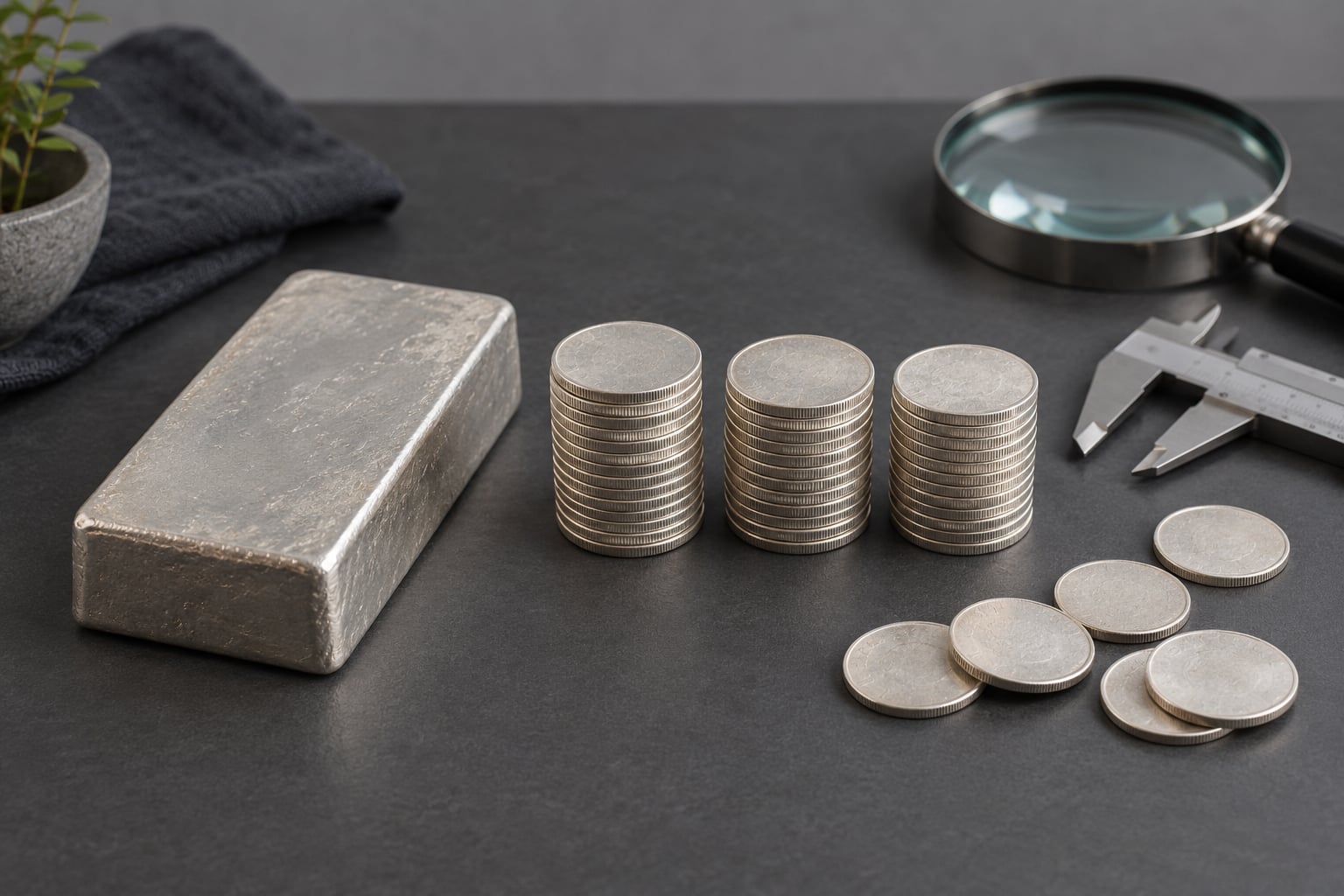
If you are comparing silver bars vs silver coins for investors, the short answer is this: coins suit smaller and more flexible positions, bars suit larger allocations where you want the lowest premium over spot, and a mixed holding gives you both. Neither format is better in the abstract, because the cost, the buyer pool and the resale path all change with size and design.
What most people get wrong is treating “cheapest to buy” as “best investment.” A 1000 oz bar usually costs you the least per ounce to acquire, and it is also the hardest single object in the trade to sell. That tension runs through every decision below, so I have laid out the criteria side by side rather than declaring a winner.
Everything below assumes you are a private investor holding physical metal, not a dealer. Rules and rates around taxes and account types vary by country and change often, so treat the tax section as orientation and check the specifics where you live.
Table of Contents
- Silver Bars vs Silver Coins for Investors at a Glance
- Purchase Price and Dealer Premiums
- Liquidity and Ease of Resale
- Why large bars are harder to sell
- Storage, Security, and Insurance
- Portability and Investment Flexibility
- Authenticity, Counterfeits, and Collector Demand
- Taxes and Ownership Considerations
- Which Should You Choose?
- Frequently Asked Questions
- Are silver bars or silver coins better for investors?
- Which has lower premiums, silver bars or silver coins?
- Are silver coins worth it for a beginner?
- Are all pre-1964 coins 90% silver?
- What is poor man’s silver?
- Can I put silver bars in an IRA?
- Conclusion
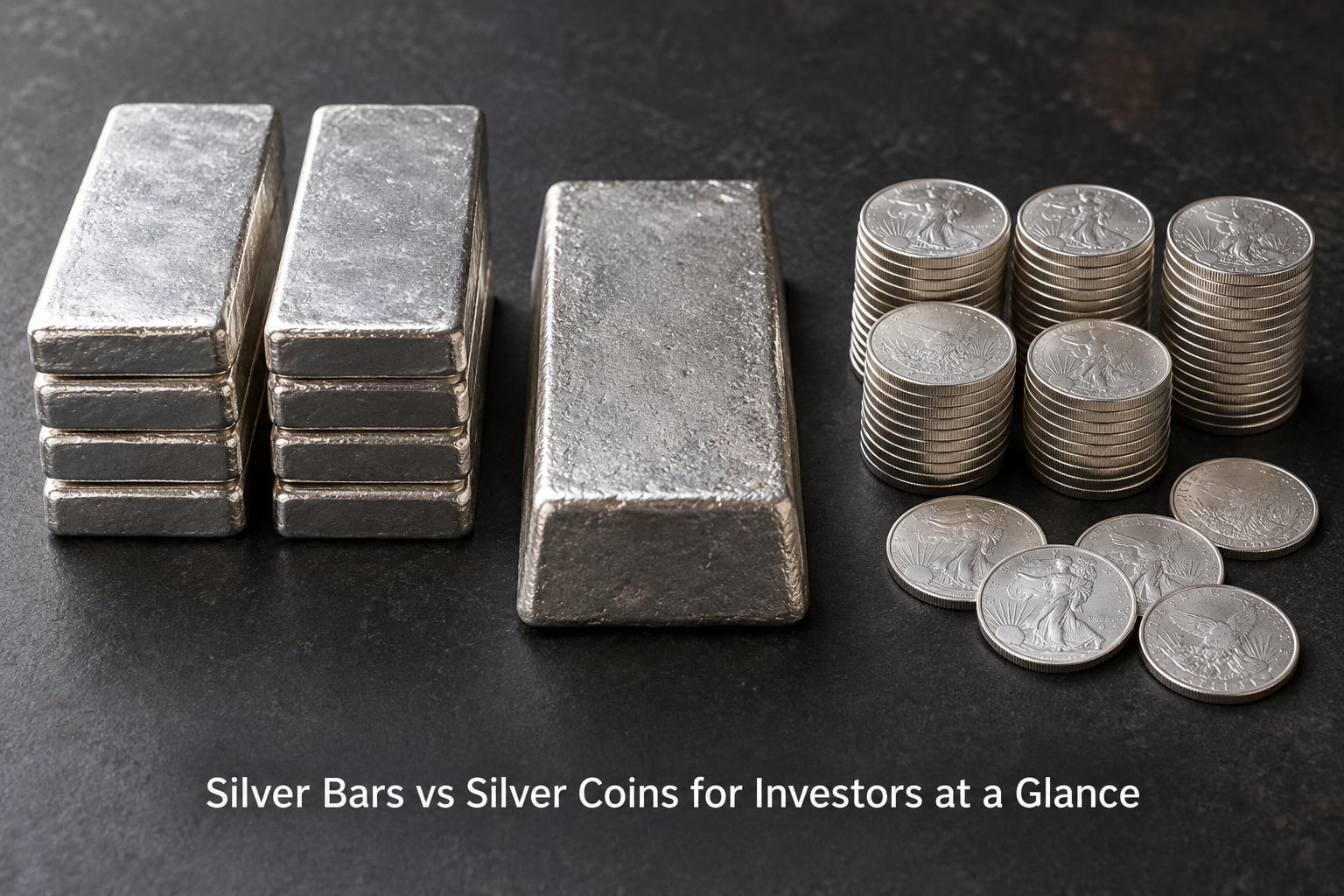
Silver Bars vs Silver Coins for Investors at a Glance
| Criterion | Silver bars | Silver coins |
|---|---|---|
| Purchase premium over spot | Lower, especially in larger sizes | Higher per ounce |
| Resale buyer pool | Narrower for large bars | Wide for widely recognised bullion coins |
| Storage space per ounce | Compact | Bulkier at the same weight |
| Partial sale possible | Only if you hold several bars | Yes, coin by coin |
| Counterfeit risk | Higher with private mint bars | Lower with sovereign mint coins |
| Dealer availability | Plenty, but sizes vary | Very common designs are easy to source |
| Best for | Accumulators buying larger amounts | Smaller budgets, gift buyers, dollar-cost averaging |
One line summarises it: bars win on cost per ounce, coins win on flexibility. Everything else in this guide is a detail attached to that trade-off.
Purchase Price and Dealer Premiums
You never simply pay the spot price. Spot price is the quoted price for one troy ounce of fine silver on the wholesale market, and it moves constantly. A dealer sells above it, and the gap is called the premium over spot.
That premium is where the real comparison happens, and it is not a fixed percentage. It moves with the dealer, the size of the order, the product, and how busy the market is when you buy.
- Coin premiums usually sit at a noticeable markup over spot, because the coin carries a face value, a sovereign mint name, a design, and a market that recognises it instantly.
- Bar premiums shrink as size climbs. A one ounce bar carries manufacturing and handling costs spread over very little metal. A 1000 oz bar carries them over a great deal of metal, so the per-ounce premium drops.
- Buyback spread is the other side of the same coin. It is roughly what a dealer pays you relative to spot when you sell back, and it is usually wider than the premium you paid to buy.
The practical point: a purchase that looks cheap on the day you buy can be expensive on the day you sell. Round-trip cost is the premium plus the buyback spread, and you only recover it if the silver price rises by more than that combined figure.
Dealers publish buyback terms, and r/Silverbugs users consistently treat dealer buyback transparency as a deciding factor when picking where to sell. Buyers who shop the exit price before they buy end up ahead of buyers who only optimise the entry price.
Liquidity and Ease of Resale
Liquidity means how quickly and how cheaply you can turn the metal back into cash. Here, coins have the clear advantage, and the reason is simple: demand is what makes something liquid.
Recognised bullion coins are requested every day by hobbyists, jewellers and other dealers. A local shop can usually take a handful of them without a fuss. That is why the community consensus on r/Silverbugs leans toward coins such as the American Silver Eagle or the Canadian Maple Leaf for the liquid part of a holding.
Bars split by size. A one ounce or ten ounce bar behaves almost like a coin. A 100 oz or 1000 oz bar does not, and forum users are blunt about it: those are generally sellable only to a large dealer or a local coin shop that wants the volume, not to a walk-in customer buying one object.
Why large bars are harder to sell
A big bar concentrates risk in a single object. One buyer has to want that exact size and weight, and that buyer will price the deal knowing you have no alternative but to accept it. Small coins have hundreds of potential counterparties instead of a handful.
Design matters too. An unusual private mint bar, a limited-edition coin, or a commemorative with a thin following trades on collector demand rather than metal demand, and that can take months or years to clear. For a metal investment, that thinness of demand is a cost you pay in opportunity, not in premium.
Storage, Security, and Insurance
Bars are efficient to store because weight concentrates into a small volume. Coins are not: a stack of one ounce pieces needs noticeably more room for the same metal, and it needs tubes, capsules or flips to keep them in order.
Storage choices come down to three options, and each one has a catch.
- Home safe keeps possession in your control, which matters to a lot of stackers, but the contents must be declared on your home insurance and some policies cap the amount of precious metal they will cover.
- Bank deposit box has limited access hours and contents are often excluded from the bank’s own liability. There is also an old saying in the metals community, if you don’t hold it you don’t own it, which is the core objection to renting storage rather than owning the metal outright.
- Professional vault gives segregated storage and a receipt, and the cost rises with both the value and the volume you store. It suits large bar holdings better than small coin collections.
Whichever you pick, the paperwork matters as much as the location. Keep the serial number of every bar, every certificate, the original purchase invoice, and dated photos. r/Silverbugs users repeatedly stress that serials, certificates and purchase records are what make a piece traceable and sellable later.
One more practical point on insurance: most policies and most vault arrangements work on a declared-value basis, so check what your cover actually responds to before you assume a large bar is fully protected where it sits.
Portability and Investment Flexibility
Coins win on flexibility because they are divisible. You can sell two instead of twenty, or make a gift without touching your core position, or sell a small amount in a year when you would not bother liquidating a 500 oz holding.
That divisibility is what makes dollar cost averaging work. Buying the same weight in fixed amounts over time spreads your entry points across different premiums and different spot prices, and that is only practical with a small unit you can repeat.
Bars are the mirror image. An investor with a steady monthly amount and a long horizon gets a lower average premium by accumulating in larger sizes, provided the storage and resale plan can handle holding big units.
The example that clarifies it: an investor who plans to hold for decades and never sell in small pieces gains little from coins. An investor who may need to raise a few hundred at a time in an uncertain year loses flexibility with only bars. Your likely selling behaviour matters more than your purchase size.
Authenticity, Counterfeits, and Collector Demand
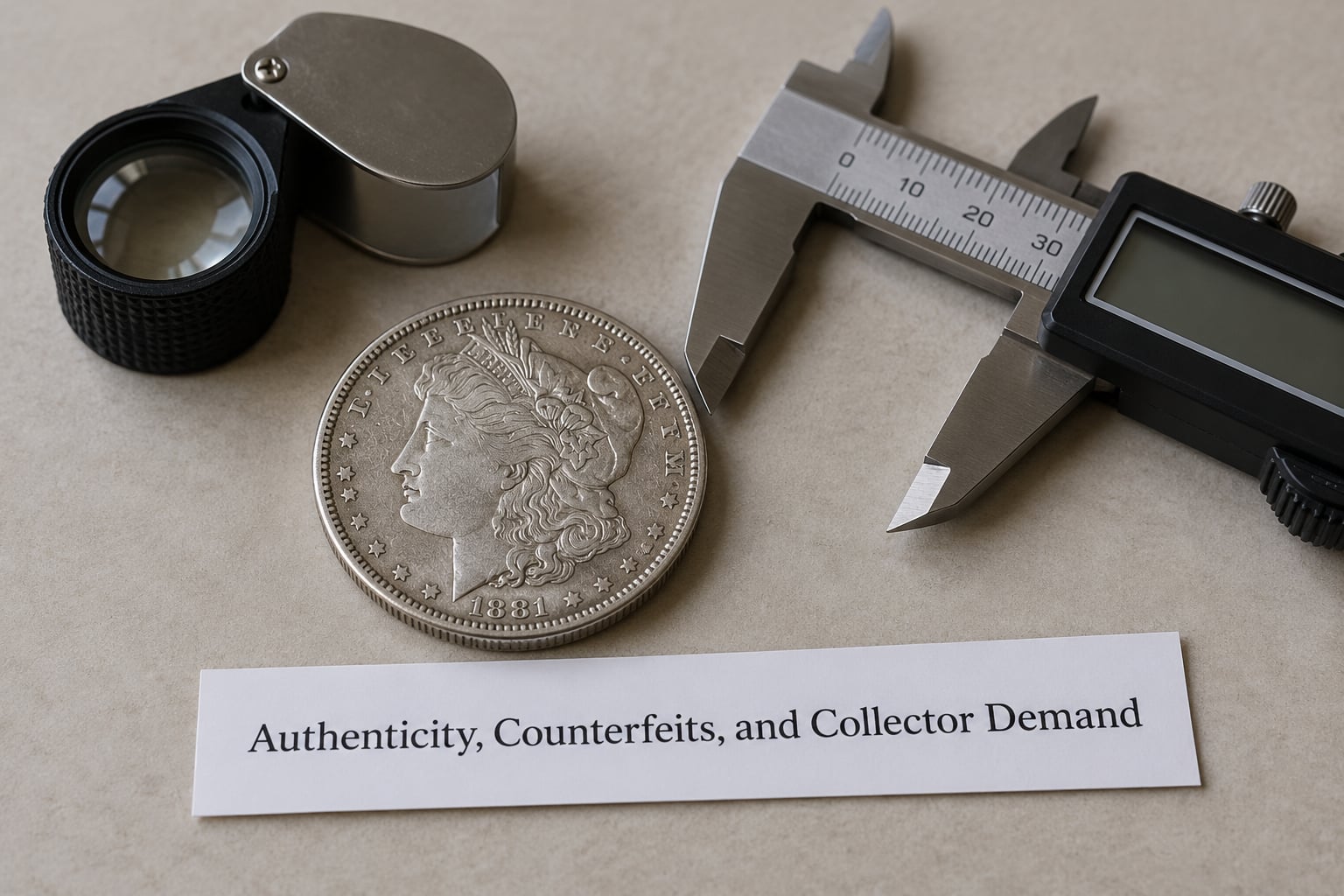
Counterfeit risk is the point where bars and coins differ most in practice. Sovereign mint coins carry a trusted name, a published weight and dimension, and an established resale market, so a counterfeiter is fighting a visible reference. Private mint bars rely on the dealer’s word and your own checks, which is why fake and tungsten-filled bars show up more often in that corner of the market.
Roughness matters too. A tungsten core in a silver-plated shell weighs correctly, and only a specific gravity test or an X-ray will catch it. It is the single most common complaint from stackers who have been burned, and it is the reason assays matter on larger purchases.
Five checks cover most cases before you buy.
- Weight on a scale. Confirm the stated troy weight, not the total package weight.
- Diameter and thickness against the mint’s published figures, ideally with calipers.
- Edge and finish. Coins from sovereign mints usually have a reeded or lettered edge; a smooth, soft, or oddly finished edge is a warning.
- Surface and lettering. Security features on modern issues include laser marks and fine engraved details that cast copies flatten out.
- Provenance. Buy from a dealer that buys back what it sells, and keep the invoice and serial with the piece.
Collector demand is a separate layer entirely. A bullion coin is valued on metal plus a modest premium. A numismatic or semi-numismatic coin is valued on rarity, condition and market appetite, and those swing in ways metal value does not. Mixing the two is how people talk themselves into overpaying, so decide which kind you are buying before you buy, and price the one you did not want accordingly.
Taxes and Ownership Considerations
Precious metal tax treatment is where general explanations turn into jurisdiction-specific detail, so take this part as orientation only. Rules differ by country, by state within a country, and by account type, and they change.
In the United States, for example, the sale of physical silver held as an investment is generally a capital transaction, precious metals collectibles can fall under a higher long-term capital gains rate than ordinary assets, and the reporting of a sale proceeds to the tax authority depends on the form the broker issues. Investment-grade silver is generally treated as a collectible for those purposes, so the long-term rate often applies, but the details depend on your holding period and your accountant’s reading of the facts.
Sales tax is separate again. Some states exempt certain bullion sales, others do not, and the exemptions are written around specific definitions. If you buy from a dealer in a state that charges, the cost of the bar or coin is not always what you think it is, which quietly eats into the premium advantage you were chasing.
Retirement accounts are a further wrinkle. Which silver products qualify as eligible for an IRA or similar accounts is defined by rules about approved fineness and form, and the eligible list is narrower than people expect. A vague idea of eligibility is worse than no idea, because it affects the purchase you make. Talk to a tax professional or a broker who handles these accounts before you commit a meaningful amount.
Which Should You Choose?
The right answer maps cleanly onto a handful of situations.
- Starting with a small amount or adding monthly choose widely recognised one ounce coins. The premium is higher per ounce and the flexibility is worth it, because it is the only way to actually follow a dollar cost averaging plan.
- Buying a larger amount and holding it long term choose bars in a size you can realistically store and resell. Ten ounce bars are a common middle ground between premium and divisibility.
- Accumulating by weight and rarely selling choose the largest bar your storage and resale plan can handle, and accept that you will sell that bar to a dealer rather than to a passer-by.
- Gifting, or buying for someone new to metal choose coins. They are recognisable, and the recipient can do something sensible with them.
- Splitting a lump sum across both keep the coin portion for liquidity and future small sales, and let the bar portion do the lower-premium work. A common starting shape is roughly a third coins to two thirds bars, adjusted to how much you expect to sell in pieces.
The mixed approach is what experienced stackers tend to land on eventually, because it covers the two things neither format handles alone: cheap entry on weight, and a real exit when only a small amount is needed.
Frequently Asked Questions
Are silver bars or silver coins better for investors?
It depends on amount and holding period. Coins cost more per ounce but resell easily in small pieces, which suits smaller budgets, monthly buying and anyone who may need to sell part of their position. Bars cost less per ounce at larger sizes and suit long-term accumulators who can store and eventually sell one or two large objects. Most experienced holders keep both, with coins for liquidity and bars for the core.
Which has lower premiums, silver bars or silver coins?
Silver bars, especially in larger sizes. Manufacturing and handling costs are spread across more metal as the bar grows, so a 1000 oz bar typically carries a much smaller per-ounce premium than a one ounce coin. The catch is the buyback side: larger bars also trade on a thinner buyer pool, so the round-trip cost can be less favourable than the entry premium suggests.
Are silver coins worth it for a beginner?
Yes, if your purchase is small and you may want to sell part of it. Recognised sovereign mint coins have a wide buyer pool, an established premium, and published specifications you can check for authenticity. The premium is higher per ounce than a bar, which is the real cost. A beginner who buys a small amount of widely recognised coins learns the whole process at low risk.
Are all pre-1964 coins 90% silver?
No. US silver coinage from before 1964 was not uniformly 90% fine. Walking Liberty half dollars, dollars, and most quarters, dimes and nickels are 90% silver, but the half dollar and the dollar followed different schedules, and some wartime issues were struck at 40% or 35%. Check the specific issue rather than relying on the year alone, especially if you are buying at a numismatic premium.
What is poor man’s silver?
It is a nickname for a budget approach to precious metals exposure, not a product. It usually means holding the highest purity and lowest premium per ounce you can, ignoring design and collectibility entirely, so most often privately minted rounds and bars. Supporters like it because the premium over spot is as small as possible. The trade-off is resale: products with no name recognition sell to dealers at wider spreads.
Can I put silver bars in an IRA?
Sometimes, but only if the specific product meets approved fineness and form requirements, and the list is narrower than most people assume. Eligibility rules differ by custodian, so check with the plan administrator before purchasing rather than after. Bars bought outside a qualifying product list cannot simply be moved in later, and buying the wrong thing first is an expensive mistake.
Conclusion
Silver bars vs silver coins for investors comes down to one question: do you need flexibility or lower cost per ounce? Coins buy you the ability to sell in small pieces and be recognised by the market. Bars buy you the cheapest entry on weight and the thinnest exit.
Here is what to do first, in order. Work out the all-in premium above spot, including sales tax where it applies. Ask the dealer for its buyback terms before you commit, not after. Check the product specifications, the assay where the size warrants it, and the mint name if the piece is meant to resell widely. Then match the format to your holding period and to how you expect to sell, rather than to the lowest headline number on the day you buy.
This article is general information, not financial or tax advice. Rules, rates and account eligibility differ by country and change over time, so confirm anything that affects your money with a qualified professional before you act on it.