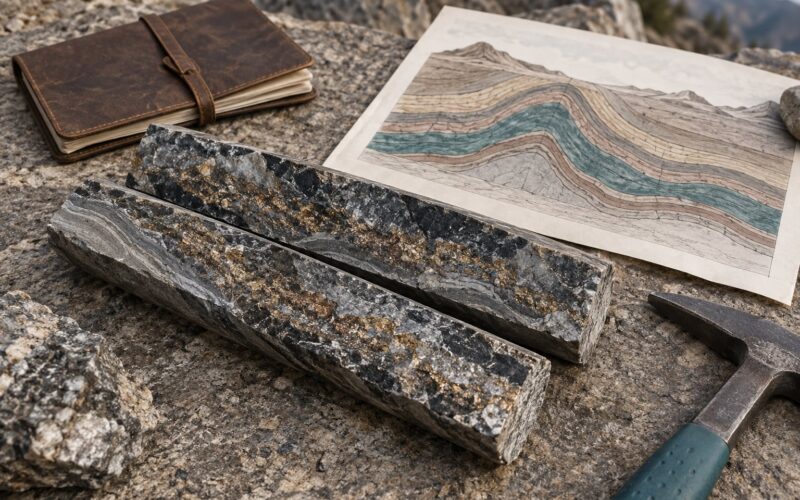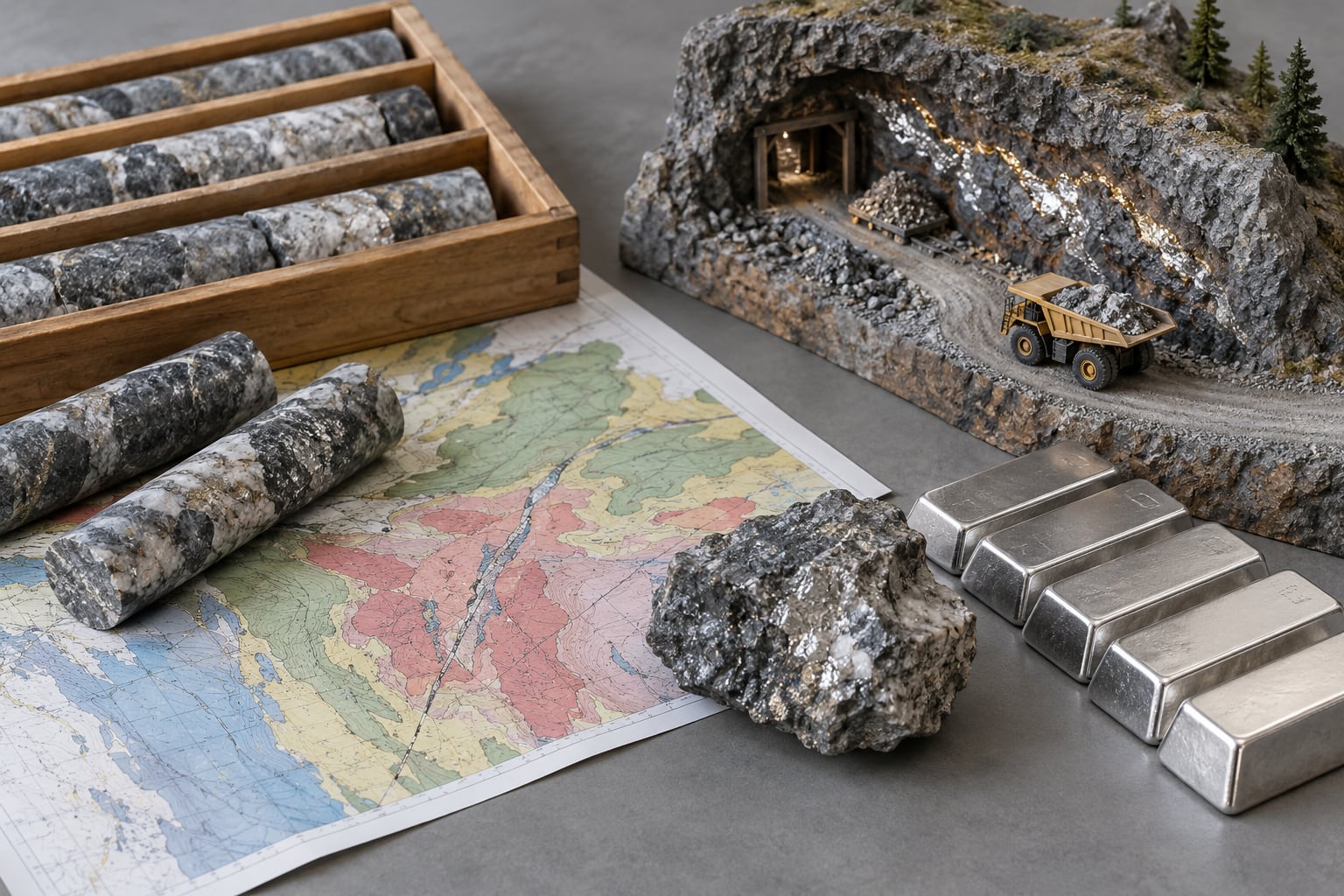
Junior mining stocks are shares in small, early-stage companies that hunt for, define and eventually build mineral deposits. Most sell nothing today, earn no profit and raise money repeatedly, so they carry a real chance of losing every dollar you put in. Nothing here is investment advice.
That warning sounds harsh, but it is the honest starting point. Beginners tend to meet this sector through a hype cycle: a drill result, a big headline, a chart that doubles in a week. Understanding the machinery underneath is what separates a considered speculative bet from a coin flip.
Our team has spent a lot of time reading junior disclosures with geology writers, prospectors and analysts who have lived through several boom-bust cycles. This guide is the fundamentals version of junior mining stocks explained for beginners, written for someone with no geology background and no mining contacts.
Table of Contents
- What Are Junior Mining Stocks?
- How a Junior Mining Company Makes Money
- How Junior Mining Stocks Make Investors Money
- Why Junior Mining Stocks Can Move So Much
- Exploration, Development, and Production Companies
- What Beginners Should Check Before Investing
- A Simple Junior Mining Stock Example
- How These Stocks Fit in a Beginner Portfolio
- Common Mistakes Beginner Investors Should Avoid
- Frequently Asked Questions
- What are junior mining stocks?
- Do junior mining stocks usually pay dividends?
- What are the biggest risks of investing in junior mining stocks?
- Does a successful exploration result mean a mine will be built?
- What should a beginner check before buying a junior mining stock?
- Conclusion
What Are Junior Mining Stocks?
A junior mining stock is a share in a small company that is searching for or developing a mineral deposit, usually listed on a venture exchange such as the TSX Venture Exchange, the ASX or an over-the-counter market in the United States. These companies typically have market capitalizations running from under a million dollars up to a few billion, and most of them generate no revenue at all.
The word junior describes stage, not quality. A senior producer might own several working mines and pay a dividend. A junior might own one promising property that has never been drilled. Both can be good or bad investments; they are simply different animals.
Beginners mix juniors up with two other groups constantly, so it is worth drawing the line early. Seniors and majors sell metal today and generate cash flow, which means their share prices track the metal price more than company news. Royalty and streaming companies own no mines but take a cut of someone else’s production. Juniors sit earlier in the chain, where company-specific events decide everything.
How a Junior Mining Company Makes Money
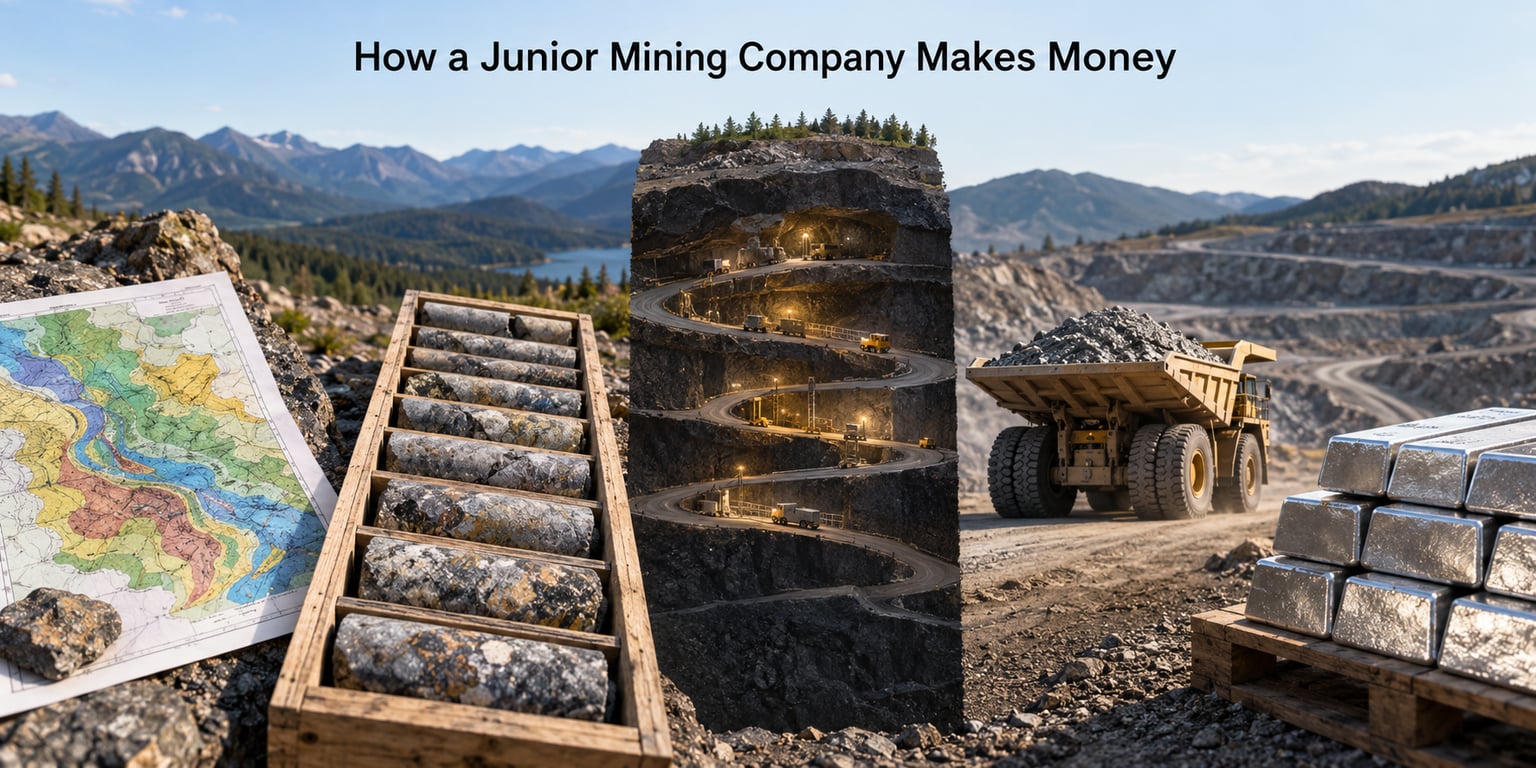
Junior mining companies do not make money by exploring. They spend money, sometimes for many years, before any revenue arrives, and the path runs through a fairly fixed sequence.
The cycle usually begins with prospecting, where someone finds a geological anomaly that looks promising on old maps. Then comes grassroots sampling and soil or stream sediment work, followed by trenching and mapping. If that justifies more spending, the company drills. Drill core gets assayed in a lab, which tells the team whether there is mineralization worth another round of drilling.
Repeat that enough times and the company might commission an independent estimate of the deposit’s size, grade and depth, normally written under the NI 43-101 disclosure standard that governs how Canadian-listed juniors report technical information. A qualified person signs and takes responsibility for the report.
After a resource estimate, a junior usually runs a Preliminary Economic Assessment, a PEA, which is an early study modelling what a mine might cost to build and produce at an assumed metal price. It is a screening tool, not a bankable document. A feasibility study comes later and is far more rigorous. Only after a board approves construction does the mine actually get built, which for a large deposit can take years.
That timeline is the key thing beginners miss. A company with a genuinely good discovery today might be several raises and several years away from shipping a single ounce.
How Junior Mining Stocks Make Investors Money
Investors in a junior make money in two ways, and they operate on completely different clocks. The first is operating profit once a mine is running. The second, which is what moves most junior share prices, is a change in what the market believes the company is worth.
Here is the second one in plain numbers. Say a silver explorer drills 2 metres at 400 grams per tonne, a strong result for a surface program, and the share price jumps from 20 cents to 35 cents. Nothing about the company’s finances has changed. What changed is the market’s estimate of what the deposit might eventually be worth, and that is called a re-rating.
Silver drifting from 25 dollars an ounce to 40 dollars helps from a different direction. It raises the value of every ounce sitting in the ground, so it can lift both the economics of a future mine and investor confidence at the same time.
The catch is that re-ratings reverse just as fast. When the news cycle moves on, a share that tripled on a discovery can give back most of the gain without anything concrete going wrong.
Why Junior Mining Stocks Can Move So Much
Because a junior’s value rests on probability rather than cash flow, small pieces of new information swing the odds a long way. Seven factors drive most of that movement.
Exploration uncertainty. Nobody knows what is underground until it is drilled, and a single hole can confirm or undermine a theory that took years to form.
Funding needs. Juniors raise capital constantly. Every raise takes time and often happens at a discount, so share prices routinely fall right after a financing is announced, even a well-priced one.
Permitting. Environmental reviews, water rights and land access can add years and impose conditions nobody planned for.
Commodity exposure. Juniors move harder than the metal itself, in both directions, because the company is small and the news flow is lumpy.
Jurisdiction risk. Royalties, taxes, currency controls and political instability all change the economics of a deposit. This is one of the first things experienced investors check.
Dilution. A company that cannot fund itself from operations keeps issuing shares. This is the single most common way beginners lose money in this sector.
Liquidity. Many juniors trade small amounts of money a day. Volume collapses when interest fades, and an exit becomes painful long before the thesis is settled.
Thin volume is the quiet killer in this sector. Without enough daily trading activity, you can end up holding a dead stock long after you wanted out. That is the reason the checklist below comes before any conversation about which companies look interesting.
Exploration, Development, and Production Companies
Not all juniors are at the same point, and the stage a company sits at determines what you should look for and what can hurt you.
| Stage | What the company owns | Revenue today | Main catalysts | Principal risk |
|---|---|---|---|---|
| Early exploration | Prospecting ground and surface samples | None | Drill results, first assays | The deposit simply is not there |
| Resource definition | A drilled deposit with an initial resource estimate | None | Larger resource, higher grades, metallurgical work | Results never reach the market |
| Study stage | A project with a PEA or feasibility study | None | Study results, financing, joint ventures | Economics fail at realistic metal prices |
| Permitting and construction | An approved project under construction | None or limited | Permits, first construction milestones | Cost overruns and delays |
| Production | A working mine | Yes, if grades and prices hold | Quarterly results, production guidance | Operating costs, grade decline, debt service |
Most juniors sit in the first three rows, which is why revenue is not a useful screening tool for them. What matters instead is how much evidence has been gathered, how much cash is in the bank and how long that cash lasts.
What Beginners Should Check Before Investing
Ten checks will tell you more than any chart, and most of them come from primary filings rather than company presentations. On Canadian listings, those filings live on SEDAR+; US filings show up on EDGAR.
1. The commodity and the jurisdiction. Know which metal you are buying and which country the rock sits in. Ask what could change the tax or royalty regime, and whether the project depends on one road, one water permit or one approval.
2. Project ownership. Find out how much of the project the company actually owns, rather than how large the deposit is in total. A thirty percent stake in a big deposit is a very different investment from full ownership of a small one.
3. Cash position and burn rate. Take the cash in the most recent financial statements and divide it by the quarterly spending. That gives you a cash runway in months, and it tells you how long the company can keep exploring before it must raise money.
4. Spending plans. A funded drill program for the current year is a real commitment. An aspirational list of projects with no budget attached is not.
5. Dilution history. Compare the share count across the last three years and read every financing announcement. Watch for private placements at a discount, large warrant and option overhang, and a history of reverse splits, which are frequently used to reset a share price before the next raise.
6. Management and insider alignment. Look at what executives and directors actually hold, and what they are doing with it. Insider buying is a stronger signal than insider salary. Filing systems such as SEDI in Canada and SEC Form 4 in the United States show the detail; selling into a rally is not the pattern you want to see.
7. Permits. Ask which permits exist, which are applied for and which are simply planned. A permitted project carries different risk from one still years from its first application.
8. Technical work. An NI 43-101 report signed by a qualified person is the baseline for credible technical information. Check the assumptions: what metal price did the study assume, and does the project still work at a lower one?
9. Debt. Debt does not always matter in exploration, but a large obligation ahead of first revenue changes how much freedom the company has. A streaming or royalty deal sold upfront is cheaper than debt and dilutes nothing, so it is often read as a sign of discipline rather than distress.
10. Promotional claims. Compare the announcement to the underlying document. Non-binding letters of intent, unsigned partnership claims and results described as transformative without a technical report behind them are the most common traps in this sector, and experienced juniors know it.
One habit worth building: read the technical report before the press release. The press release tells you what the company wants you to remember, and the report tells you what is actually known.
A Simple Junior Mining Stock Example
Consider a fictional silver exploration company called Redtail Silver. It owns a 100 percent stake in a 900-hectare property in a stable mining jurisdiction, a plausible silver-bearing vein has been mapped across 400 metres, and preliminary trenching has returned encouraging values. Market capitalization sits at 30 million dollars.
The encouraging part is the geology. Rock that looks like this sometimes continues, sometimes fades after two metres. Nobody knows yet, which is exactly why the drilling program matters.
Now look at what has not happened. There is no resource estimate, so nobody can say how much silver is actually there or at what grade. There is no PEA, so nobody knows the mining cost, the processing route or whether the deposit would cover the capital needed to build it. There is no metallurgical testing, which is where silver projects often learn something uncomfortable about recovery.
The company has four million dollars in cash and is spending 300 thousand a quarter, which gives roughly three years of runway before a financing, assuming the plan does not change. Two insiders hold shares. A strategic partner is mentioned in passing but nothing is signed.
The right beginner response is not excitement or dismissal. It is a note: this is an early-stage explorer with a real geological idea, unfunded beyond a few years, no economics yet and one drill program ahead of it. The catalyst is the drill result. The risk is that the raise happens before good news arrives.
None of that changes the decision on its own. The promise and the proof sit in completely different places, and only one of them is backed by data.
How These Stocks Fit in a Beginner Portfolio
Position sizing matters more here than any stock selection decision you will make, because the base rate is unflattering. Most exploration companies never become mines, and many are sold, merged or abandoned along the way. Treat junior mining stocks explained for beginners as a speculative sleeve, not a core holding.
Size each position for total loss. If a company going to zero would not change your life, the position is probably close to the right size. Decide that figure before you buy, not after a bad quarter.
Spread the exposure. Ten small positions in different projects behave very differently from one concentrated bet. Diversification across companies helps, and diversification across commodities helps more, because gold, copper and lithium respond to different drivers.
Check liquidity before size. Buying a thin stock in size forces you to become the exit. Look at average daily volume and hold back if the volume is small relative to what you want to own.
Know your time horizon. A junior that needs five years to reach a decision is not a short-term position. Most holders trade around catalysts rather than holding indefinitely, and either way the thesis needs an exit condition written down before you buy.
Keep the core boring. Established producers and a real cash allocation do the heavy lifting for a portfolio. The junior sleeve is where a portion of your money can take risk, not the place where everything is asked to work.
Tax treatment, contribution rules and minimum investment sizes differ by country and by account, and they change, so check current rules with a qualified professional before you buy anything.
Common Mistakes Beginner Investors Should Avoid
Most beginner losses in this sector come from a short list of repeated mistakes, and each one has a simple fix.
Buying because of a dramatic assay result. A spectacular intercept from a few holes tells you something exciting about a small volume of rock. Check the width, the depth of the intercept, the number of holes and whether the assay method is reliable before reacting.
Ignoring dilution. A share price that rises 40 percent after a raise is not a gain for existing holders, because their ownership just shrank. Track share count, not only price.
Treating an inferred resource as a reserve. Resource categories carry very different confidence levels, and only reserves and mineable resources are supported by the economic and technical work needed for a real mine. Marketing language blurs this constantly.
Chasing news spikes. The gap-up on the day of an announcement is where most of the return is already spent. Chasing it is how a good story becomes a bad position.
Comparing juniors with producers. A producer can be valued on cash flow. A pre-revenue junior cannot, so price-to-earnings comparisons with major miners are meaningless.
Treating the sector as low risk. Junior mining stocks explained for beginners is a high-risk strategy that can and does end in total loss for the majority of participants. Anyone presenting it otherwise is selling something.
Marrying positions and averaging down. If the geological case has broken, a lower price is not a reason to add. Decide what would change your mind, and write it down before you buy.
Frequently Asked Questions
What are junior mining stocks?
They are shares in small, early-stage exploration and development companies listed on venture exchanges such as the TSX Venture Exchange, the ASX or over-the-counter markets. Their job is to find, define and eventually build a mineral deposit. Most sell no metal yet, earn no profit and fund themselves by issuing shares, so buying one is a speculative bet on the company’s project and management rather than on current earnings.
Do junior mining stocks usually pay dividends?
Rarely, and you should not expect one. A dividend has to come out of profit, and most juniors have no profit, so they pay nothing and reinvest any cash into exploration. Some exploration-stage companies even sell scarce assets to fund drilling. If income matters to you, established producers, royalty companies or simply holding metal directly are the parts of the sector that actually distribute cash.
What are the biggest risks of investing in junior mining stocks?
Dilution is the first one: companies that cannot fund themselves keep issuing shares, and your ownership keeps shrinking. Beyond that come commodity price exposure, permitting delays, jurisdiction and political risk, exploration results that disappoint, thin trading volume that traps you on the way out, and management quality. Any one of these can take most of your money, and losing the whole investment is a realistic outcome.
Does a successful exploration result mean a mine will be built?
No. It means the company learned something encouraging, which is genuinely valuable. Building a mine still requires a resource estimate, metallurgical testing, a preliminary economic assessment, financing, permits and a board decision to proceed, and each of those can fail or take years. Most deposits discovered by juniors never become producing mines, so treat a good drill result as a reason to keep watching rather than a reason to assume production.
What should a beginner check before buying a junior mining stock?
Start with the commodity and jurisdiction, then confirm how much of the project the company actually owns. Work out the cash on hand, the quarterly burn and the resulting cash runway, and read the share count trend along with warrant and option overhang. Then check insider filings, permits, any NI 43-101 technical report and the metal price its economics assume. Read filings rather than press releases, and size the position so you could lose it entirely.
Conclusion
Work through the sequence in order: learn which stage the company sits at, name the commodity and jurisdiction, check cash and dilution, understand the catalyst you are waiting for, and then start with a position sized so that losing it changes nothing about your life.
That is what junior mining stocks explained for beginners really comes down to. The upside is real and so is the risk of losing everything, and neither fact tells you what to buy today. This article is general information, not investment advice.