You can get oil exposure without touching a barrel by owning something that tracks the crude price: an oil ETF, a futures contract, an options contract, or shares in oil producers and energy companies. For most beginners, an oil ETF bought through an ordinary brokerage account is the simplest starting point, and the vehicle you pick matters more than the decision to invest at all.
The four routes do not behave alike. Two are passive holdings that quietly gain or quietly bleed over years. Two are positions that can move faster than you can refresh a page. Most first-time mistakes happen because people treat an oil trade and an oil investment as the same thing.
This is general information, not personal financial advice. Tax and account rules vary by country and by state, and commodity prices can move against you quickly. You can lose money in any of the routes below.
Table of Contents
- What You Need
- Step-by-Step: How to Invest in Oil Without Buying Barrels
- Step 1: Choose the Type of Oil Exposure You Want
- Step 2: Compare Costs, Liquidity and Tracking Differences
- Step 3: Decide How Much Oil Exposure to Hold
- Step 4: Open the Appropriate Account and Make the Purchase
- Step 5: Monitor the Position and Review It Periodically
- Common Mistakes
- Frequently Asked Questions
- Can a regular person invest in oil?
- Can I directly invest in crude oil?
- What is the best way to invest in oil right now?
- Is USO a good buy right now?
- Does USO ETF pay dividends?
- How much money do I need to trade oil futures?
- Conclusion: Start with Simple, Liquid Oil Exposure
What You Need
You need far less than you would for buying barrels, but you do need a few things sorted before you click buy.
- A brokerage account that allows your chosen instrument. Most retail brokers handle ETFs, individual stocks and options inside a single account. Futures almost always need separate approval, a signed risk acknowledgement and margin paperwork before the first trade goes through.
- A decision about which benchmark you are buying. WTI and Brent are different products from different exchanges. Deciding between them first saves you from owning something that drifts away from the price you had in mind.
- Free primary data. The US Energy Information Administration publishes a weekly petroleum status report, OPEC and OPEC+ publish production decisions, and any decent broker shows you the futures curve for free. You do not need a paid terminal to track crude.
- Money you can afford to lose. Crude has moved double digits in a week more than once in the last few years. Whatever you put in, assume some of it never comes back.
- A written plan before the position exists. Write down the holding period, the maximum share of your portfolio, and the condition that would make you sell. Decisions made in advance survive contact with a bad week; decisions made in the moment usually do not.
Step-by-Step: How to Invest in Oil Without Buying Barrels
Here is the order I would work in. It takes maybe an hour of reading and a few minutes of setup, and it stops you from buying a fund before you understand what it holds.
Step 1: Choose the Type of Oil Exposure You Want
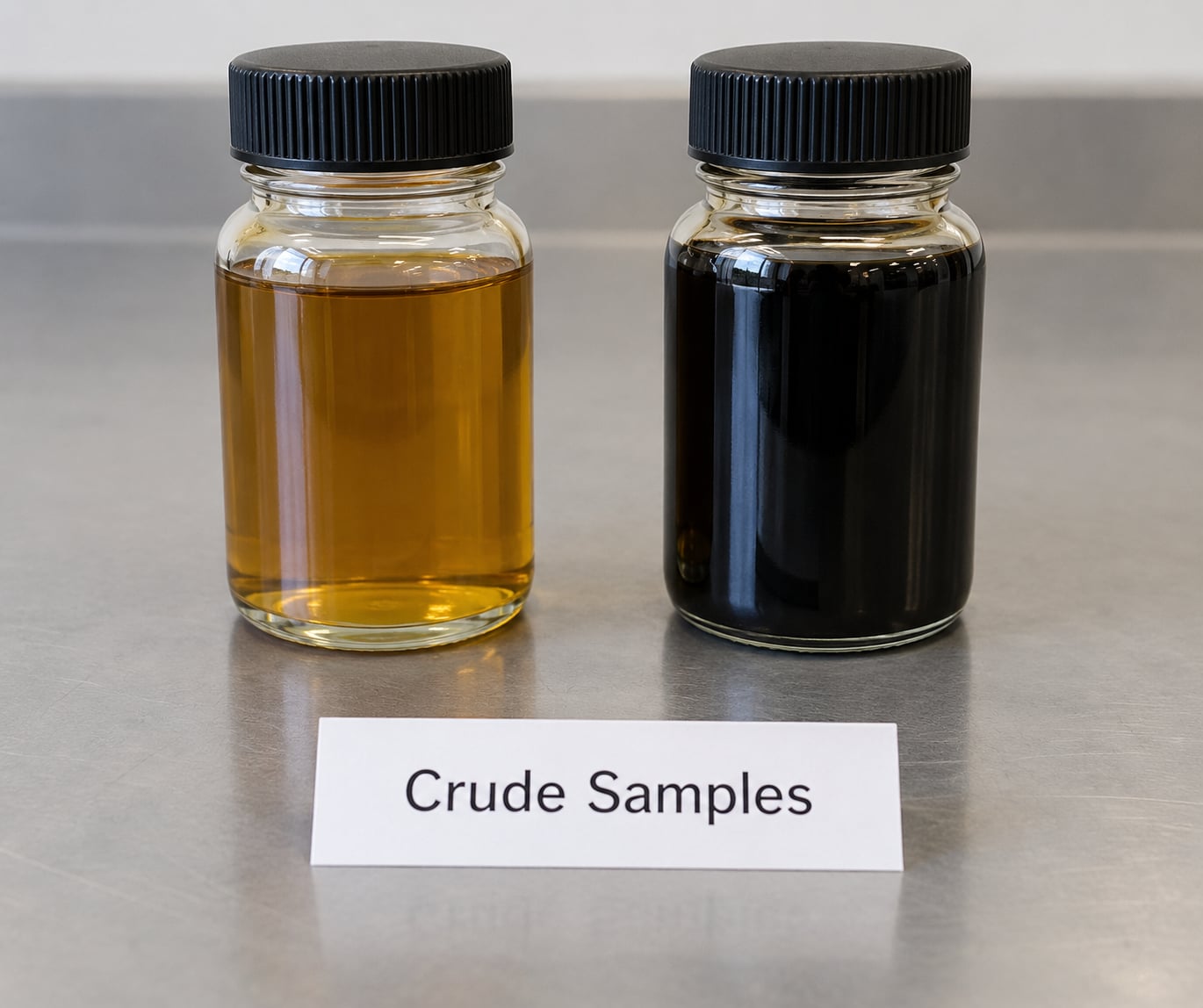
You cannot own crude oil itself. Every barrel produced by a US or Canadian producer is sold to a refinery, and the futures contracts that quote crude prices are cash-settled, meaning nobody takes delivery. What you actually buy is a claim on a price, and there are four common ways to hold that claim.
First, the benchmark. WTI, short for West Texas Intermediate, is light sweet crude from Cushing, Oklahoma, and it is the US contract people mean when they say “the oil price.” Brent is the waterborne benchmark that most global cargoes are priced against, and it is generally sourer than WTI, meaning higher sulphur. Most ETF funds track one or the other, and they rarely track it perfectly.
Route 1, oil ETFs. A fund holds crude futures on your behalf. You buy a share like a share of any stock, with no margin and no expiry. USO is the most widely held US fund tracking WTI futures; BNO tracks Brent. OILK and DBO take a different approach, holding a mix of longer-dated contracts intended to be held for years rather than traded around.
Route 2, futures. You buy a contract for a fixed quantity at a fixed price, and you close it out before or at expiry. A crude futures contract represents about 1,000 barrels, and your broker only requires a margin deposit, which is why futures are the most amplified route on this page. Cash-settled contracts mean no delivery van turns up at your house.
Route 3, options. A call option gives you the right, not the obligation, to buy crude at a set price; a put gives you the right to sell. You pay a premium, you know the maximum you can lose, and you can trade defined-risk views on oil with a small amount of capital. This is the least forgiving route for a beginner, not because of the mechanics but because the odds are rarely obvious.
Route 4, energy equities. You buy shares in the companies that produce, refine, transport and service the oil industry, or a sector fund that holds them. These do not track the crude price. They track profits, which depend on the price of oil, costs, dividends, debt and how well management is running things. That gap is the reason some long-term holders prefer them to a futures fund.
| Route | What you actually own | Capital needed | Margin involved | Main risk | Best for |
|---|---|---|---|---|---|
| Oil ETF | Units of a fund holding crude futures | Any amount, fractional shares usually supported | None | Tracking decay when the curve is in contango | Long-term holders and beginners |
| Futures | A dated contract on 1,000 barrels, cash-settled | Margin deposit set by the broker | Required | Amplified losses, margin calls, monthly rolls | Experienced traders with a defined exit |
| Options | A right, with an expiry, to buy or sell crude | The premium, often small | Usually none if bought outright | Premiums expiring worthless | Hedging and defined-risk speculation |
| Energy equities | Shares in producers, refiners and oilfield services | Any amount | Optional, avoid it | Company-specific and sector risk, not oil-price tracking | Investors who want income and long holding periods |
Step 2: Compare Costs, Liquidity and Tracking Differences
This is the step that separates a useful guide from a broker advertisement, because every oil fund has a hidden cost that shows up only over years.
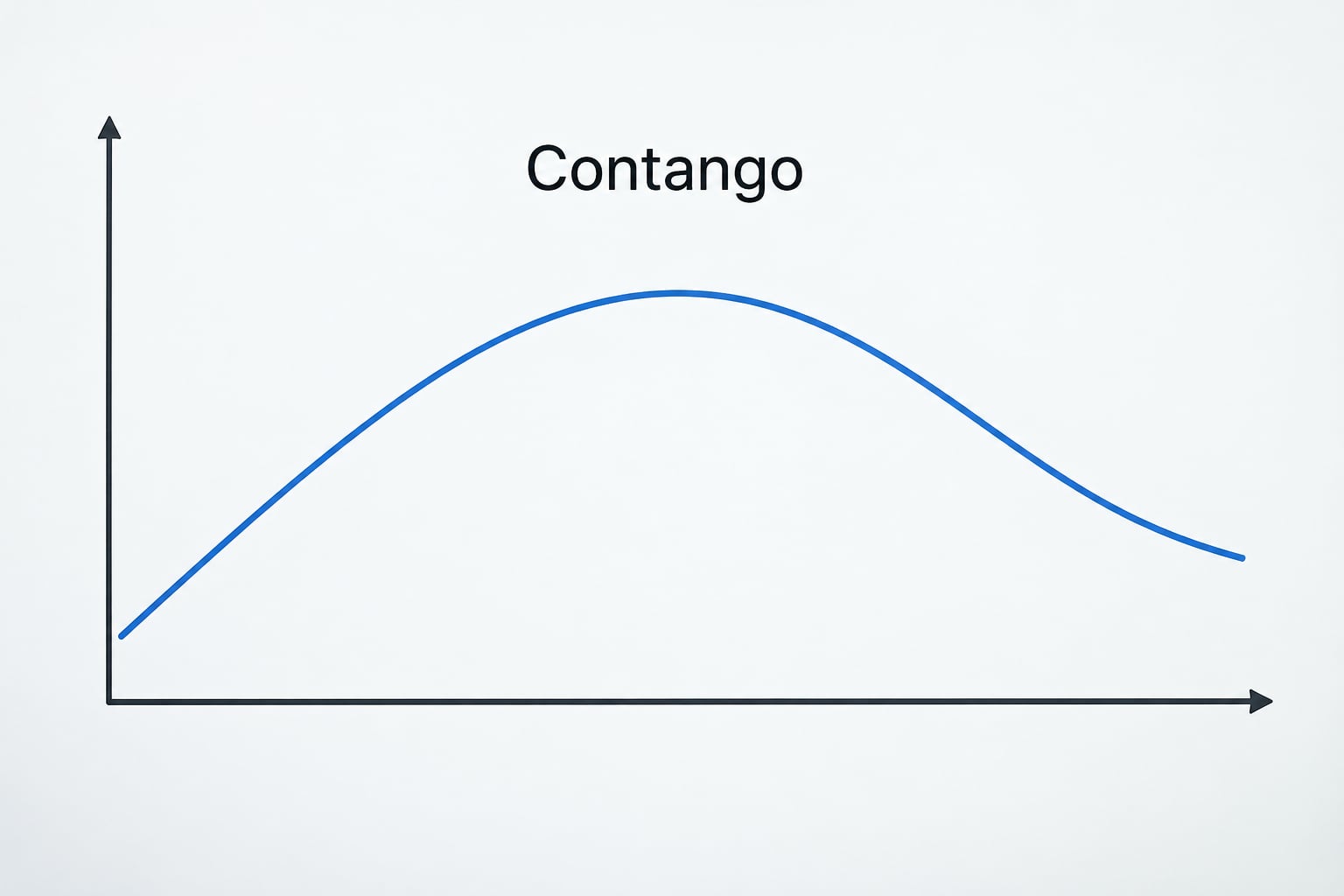
That cost is the roll. A futures-based fund cannot hold one contract forever, because it expires. When it approaches expiry, the fund sells it and buys the next one out. If the further-out months cost more than the near month, the curve is in contango, and every roll quietly pays a premium. When the near month is more expensive than the far months, the curve is in backwardation and the roll adds a small gain. The gap between the fund’s return and the actual crude price over a long stretch is called tracking difference, and in a contango market it is reliably negative.
This is the honest answer to the question people ask on investing forums every year: how an oil ETF can lose money over a multi-year period while the oil price went up. It happens because the price rose and then fell back inside a period of high contango, and the rolling cost ate the return. It is also why the funds built for long holding periods roll differently and cost more in fees to compensate.
Three numbers to compare before you buy: the expense ratio on the fund page, whether the fund holds near-month contracts or a spread of longer-dated ones, and the average daily volume, because a thin fund gives you a wider spread between the bid and the ask every time you trade. Check the current figures on the fund’s own page rather than trusting a listicle, because both fees and strategy change.
| Fund | What it tracks | Structure note | Who it suits |
|---|---|---|---|
| USO | WTI crude futures, near-month emphasis | Built for short and medium holding periods; rolls frequently | Traders and short-term tactical exposure |
| BNO | Brent crude futures | Follows the waterborne benchmark, not WTI | Investors who want Brent rather than US crude |
| DBO | Oil futures with a buy-and-hold strategy | Designed to hold positions rather than trade them | Longer holding periods |
| OILK | Oil futures, longer-dated contracts | Aims to avoid the worst of the near-month roll | Holders who accept higher fees for less roll churn |
| XLE | Large US energy companies | Equity fund with dividends, no futures roll | Long-term income and sector exposure |
| XOP | Upstream exploration and production | More concentrated in producers than XLE | Investors wanting direct drilling exposure |
| IEO | US exploration and production companies | Smaller and more targeted than XOP | Focused bets on US producers |
One practical note on tax. US futures-based funds are treated as partnerships by the IRS, so they generate a Schedule K-1 and often a related Form 1099-DIV with a return of capital character. That adds a paperwork step at tax time and can behave awkwardly in a taxable account. Some products are packaged to avoid it. Rules differ outside the US and change often, so check with a tax professional before you pick a home for the position.
Step 3: Decide How Much Oil Exposure to Hold
Commodities are not a savings account and they are not a bond substitute. They belong in a portfolio as a small satellite position for a stated reason, and the reason changes the sizing.
If you want an inflation and supply-shock hedge, you are looking for a small standing position that you rebalance rather than trade. If you want to express a view on a supply disruption that you expect to fade, you want a short holding period and a hard exit. If you want income, energy equities fit the job better than a futures fund, because they pay distributions from company profits rather than from rolling contracts.
| Investor type | Route that fits | Holding period | What to watch |
|---|---|---|---|
| First-time commodity investor | A broad oil ETF, or energy sector equities | Years | Tracking difference, all-in cost, position size |
| Long-term saver | Energy equities or a long-dated futures fund | Decades, with rebalancing | Dividend coverage, expense ratio, K-1 treatment |
| Event-driven trader | Futures or options | Days to weeks | Margin, expiry, position sizing before entry |
| Hedger with a specific cost exposure | Puts or a short futures position | Matched to the underlying exposure | Basis between the hedge and the thing being hedged |
A rough guide people argue over endlessly: a commodity sleeve is often treated as a low-to-mid single-digit percentage of a diversified portfolio. I would add the honest qualifier that the right number is the largest one that would not force you to sell during a 30 percent drawdown, because you will live through at least one.
Step 4: Open the Appropriate Account and Make the Purchase
For ETFs and stocks, a standard individual or joint brokerage account is all you need, and most brokers now offer commission-free trades on both. Open it, fund it, and search the ticker rather than the fund’s marketing name, because several products have near-identical names.
For options, the same account usually works, but the broker will ask you to approve options trading separately and will set a level based on experience. Level 2 lets you buy calls and puts outright with defined risk. That is where a beginner should stop.
For futures, expect a separate agreement, a margin agreement and a risk disclosure you should actually read. Margin is not a deposit of the full contract value; it is a fraction of it, which means the position carries more exposure than the money in it, and the broker can demand more or close the position out if the account falls below the requirement. That is the single most common way retail traders lose more than they planned to.
On the order itself, use a limit order rather than a market order for anything thin. A market order takes whatever price is on the book, and in a fast market that price can be a poor one. Place the order, check the fill, and record the date, the price and the reason in a note. A short written record is worth more than a journal app.
Step 5: Monitor the Position and Review It Periodically
Set a monthly calendar reminder. Half an hour is enough. Here is what to look at and why it matters.
| Driver | Effect on crude prices | Where to track it |
|---|---|---|
| OPEC+ production decisions | Quota changes move supply expectations quickly | OPEC and OPEC+ official statements |
| US crude inventories | Builds weigh on price, draws support it | EIA weekly petroleum status report |
| Demand and refinery runs | Weak run rates signal softer consumption | EIA monthly and weekly data |
| Geopolitics and sanctions | Supply risk adds a premium that fades once resolved | Wire services and government announcements |
| The US dollar | Oil is priced in dollars, so a stronger dollar pressures crude | Broad dollar index |
| The futures curve shape | Contango means the roll is costing you; backwardation helps | Your broker’s curve display |
Also check the fund itself, not just the price. Has the strategy changed, has the expense ratio moved, is volume still healthy, has the K-1 treatment altered. For equity positions, look at the operating cost per barrel, the debt level and whether the dividend is being funded by cash flow rather than by borrowing.
Then review against the note you wrote before you bought. If the reason you wrote down still applies, do nothing, which is a decision. If it no longer applies, sell. Re-buys and second-guessing every month is the most expensive habit in this entire topic.
Common Mistakes
Confusing crude oil with energy stocks. A sector fund does not track the oil price. It tracks company profits, and the two can move in opposite directions over a year. Decide which one you actually want before you buy, and stop complaining that XLE did not follow crude.
Ignoring contango. This is the most expensive mistake on the list and the least visible. Check the shape of the futures curve and the fund’s roll schedule before you commit, and if you intend to hold for years, weight the funds designed for holding rather than the ones designed for trading.
Using borrowed exposure before you understand it. Futures and leveraged products turn a 10 percent move in crude into a much larger move in your account. Learn the mechanics on a small position first, and never trade oil with money earmarked for bills.
Buying after a sharp rally. Fear of missing out is the reason most people enter a commodity position right after a large move. If your reason for buying is that everyone is talking about it, there is no reason.
Overlooking fees and spread. The expense ratio, the bid-ask spread, the commission and the tracking difference all come out of the same return. A fund with a lower fee that you trade often can cost more than an expensive one you hold.
Treating oil as a guaranteed hedge. Crude hedges some inflation scenarios and does nothing in others. A hedge that only works in one scenario is a bet, and you should size it like one.
Two smaller ones worth naming. Do not hold a futures position through expiry without a plan, because the roll decision on the last day is made under stress. And do not let a position become a portfolio, because oil is a volatile input price and a long-only equity investor who is not already concentrated in energy is usually better served by a modest allocation than by conviction.
Frequently Asked Questions
Can a regular person invest in oil?
Yes. You do not need a special licence or a large amount of money. Most retail brokers let you buy oil ETFs, energy sector funds and individual oil company shares in an ordinary brokerage account, often with fractional shares. Futures and options need extra approval. Start with an ETF or an energy fund, keep the position small, and treat it as a satellite holding rather than a core one.
Can I directly invest in crude oil?
Not really. Crude is sold to refineries, and futures contracts on crude are cash-settled, so no physical delivery reaches you. What you can buy directly is the contract, through futures or options, and that comes with margin and expiry. Most people hold futures indirectly through an ETF instead, which removes the roll and margin work while adding a fee and some tracking difference.
What is the best way to invest in oil right now?
There is no single best answer, and anyone telling you otherwise is selling something. For a multi-year holding, a long-dated futures fund or energy equities suit the job. For a short tactical trade, a near-month oil ETF is more direct. For defined risk, options. Match the instrument to your holding period, compare all-in costs, and size the position so a 30 percent drop would not change your plans.
Is USO a good buy right now?
USO is a useful short-term vehicle for WTI exposure, and a poor default for holding for years. It holds near-month futures and rolls frequently, so in a contango market the roll works against the fund every month. That is the mechanism behind the widely reported long-run losses in a fund during years when crude itself went nowhere or fell. Check the current curve and the fund’s roll schedule before deciding.
Does USO ETF pay dividends?
Not in the ordinary sense. USO holds futures contracts rather than companies, so it has no company dividends to pass on. Investors sometimes receive distributions, and a small share of the value is treated as a return of capital for tax purposes, which reduces your cost basis rather than counting as income. Distributions are irregular, so do not build an income plan around them. Energy equity funds pay dividends from real company profits.
How much money do I need to trade oil futures?
Less than the contract value and more than a beginner should risk. A crude futures contract represents about 1,000 barrels, and your broker holds margin, often a small fraction of that notional value, so the actual exposure is many times the cash in the account. That is why futures are the fastest way to lose money on this list. Get approved, start with the smallest position your broker allows, and know your exit before you enter.
Conclusion: Start with Simple, Liquid Oil Exposure
Start by writing down why you want oil exposure and how long you expect to hold it, because that single sentence rules out most of the options. For most people the answer is a modest position in a liquid, low-cost fund bought through a normal brokerage account, rebalanced on a schedule rather than traded on a headline.
Then check the curve before you buy, read the fee and roll policy on the fund’s own page, and pick a size you could survive losing half of without changing your life. Learn how to invest in oil without buying barrels well enough that a 20 percent move in crude is an interesting fact about your portfolio rather than an emergency.