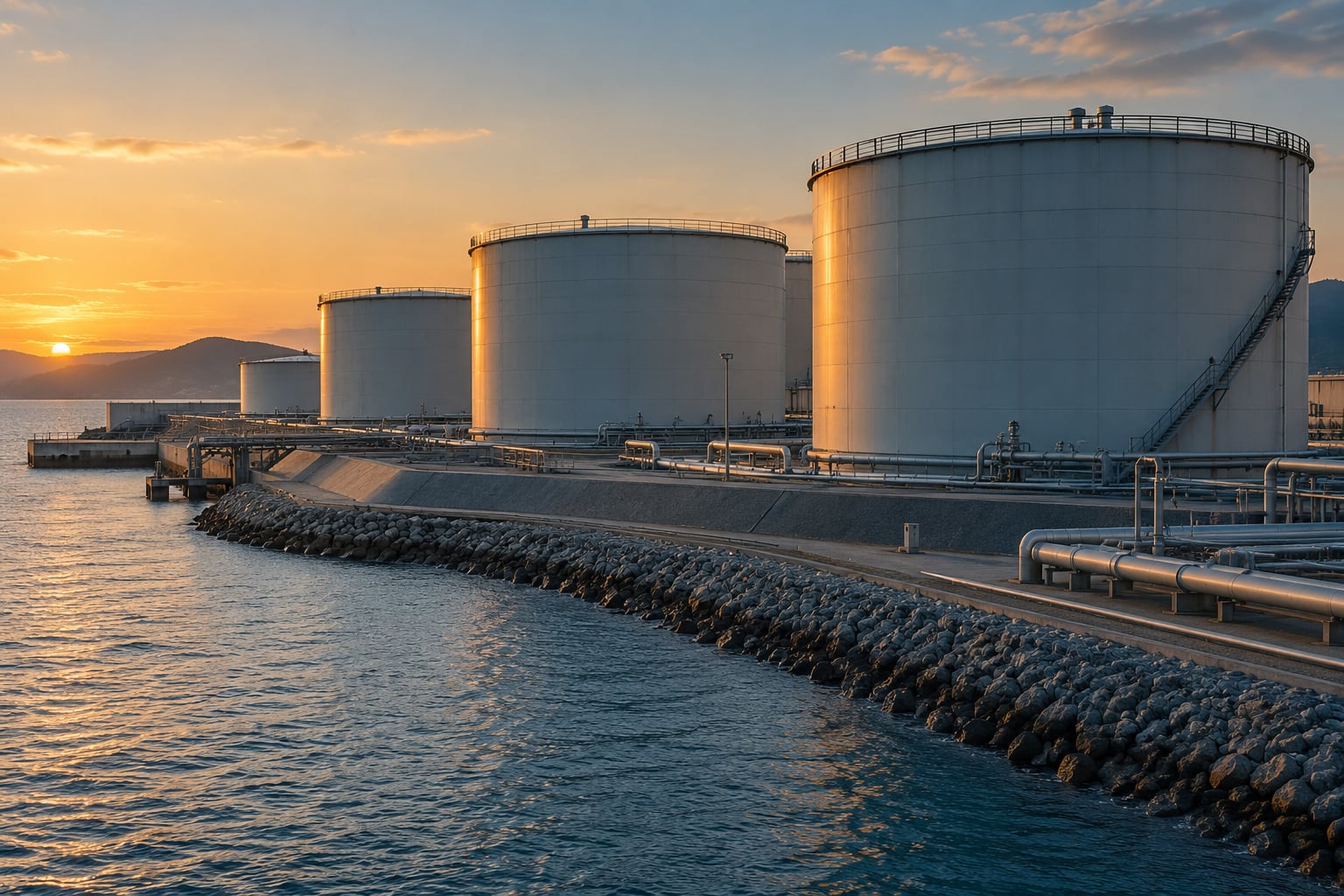
The Strategic Petroleum Reserve is a U.S. Department of Energy stockpile of emergency crude oil, held in 61 underground salt caverns at four sites on the Gulf Coast of Texas and Louisiana. It is the world’s largest emergency supply of crude oil, and it exists to cushion the U.S. economy against severe petroleum supply disruptions.
As of the week ending September 4, 2026, the reserve held roughly 285.4 million barrels, the lowest level since the early 1980s. That number moves every week, so the honest way to talk about it is with a date attached to it.
Below is the plain-English version: what sits in those caverns, who decides when it comes out, what a release does to the price of gasoline, and what an investor actually watches.
Two buckets cover most of what people need to know:
Purpose and history
- Created after the 1973-74 oil embargo, when a cut in imported supply sent prices through the roof and the economy into a recession.
- Authorized by the Energy Policy and Conservation Act of 1975, signed by President Gerald Ford.
- Tied to an international commitment: 90 days of net imports under the Agreement on an International Energy Program. The U.S. share of any coordinated action is 43.9 percent.
- Now much smaller than it was, after a 180-million-barrel release in 2022 and a further 172-million-barrel action announced March 11, 2026.
Storage and capacity
- 61 underground salt caverns across four sites: Bryan Mound near Freeport, Texas; Big Hill near Winnie, Texas; West Hackberry near Lake Charles, Louisiana; and Bayou Choctaw near Baton Rouge, Louisiana.
- A fifth site, Weeks Island in Louisiana, was mined out and backfilled in 1999.
- 714 million barrels of authorized storage capacity. The Energy Policy and Conservation Act allows up to 1 billion.
- A maximum withdrawal rate somewhere between 2.7 and 4.4 million barrels a day, depending on how full the caverns are and which sites are running.
Table of Contents
- What Is the Strategic Petroleum Reserve?
- Why Was the Strategic Petroleum Reserve Created?
- How Much Oil Is in the Reserve?
- Who Manages the Strategic Petroleum Reserve?
- How Does Oil Get Into the Reserve?
- Why does the government rotate reserve oil?
- When Can the Reserve Be Released?
- How Does the Reserve Affect Oil Prices?
- Can a release lower gasoline prices?
- What Is the Difference Between the SPR and Other U.S. Oil Reserves?
- Why Does the Strategic Petroleum Reserve Matter to Investors?
- What Are the Limitations and Criticisms?
- Frequently Asked Questions
- Is the Strategic Petroleum Reserve used every day?
- Who owns the oil in the U.S. Strategic Petroleum Reserve?
- Does drawing from the Strategic Petroleum Reserve lower gasoline prices immediately?
- Why does the government sometimes withdraw oil from the reserve?
- Are Strategic Petroleum Reserve barrels counted in regular commercial oil inventory data?
- Conclusion
What Is the Strategic Petroleum Reserve?
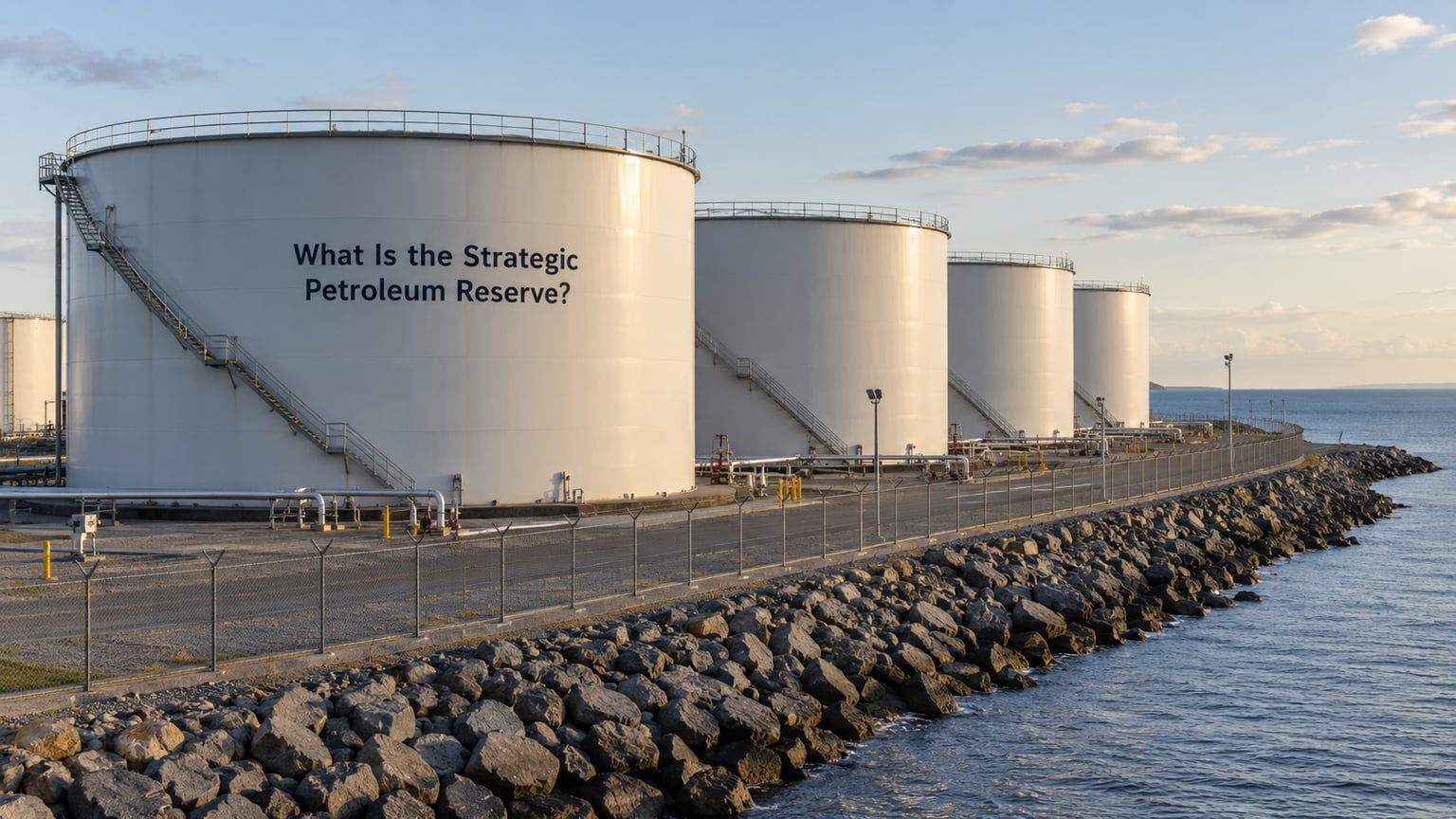
The Strategic Petroleum Reserve holds crude oil, and only crude oil. It does not hold gasoline, diesel or jet fuel, which is the single most important thing to understand about it before anyone expects a release to fix a shortage at the pump.
What it does hold is raw petroleum pushed into salt caverns deep underground, where pressure from the surrounding rock keeps it liquid and stable for years. The crude is a mix of grades, including heavier sour barrels alongside the lighter sweet crude most U.S. refineries were built to run.
That mix matters. A refinery designed for light sweet crude cannot eat a heavy sour barrel without more processing, which cuts its output. So the reserve is not a direct substitute for the gasoline sitting in a regional tank farm today.
What separates it from ordinary commercial oil inventories is purpose. Commercial barrels are held by private companies to make a profit, and their owners will sell them whenever the price makes it sensible. SPR barrels are held by the government as insurance, to be used when the President or Congress says the country has a supply problem severe enough to justify pulling them.
Why Was the Strategic Petroleum Reserve Created?
The answer goes back to the 1973-74 oil embargo, when oil-producing countries cut shipments to the United States and much of the rest of the West. Retail fuel prices climbed fast, lines formed at gas stations, and the U.S. economy stalled.
The lesson policymakers took from that was not that oil is scarce. It was that a country that depends on oil passing through a few shipping lanes and a handful of chokepoints can be pushed into recession by something happening on the other side of the world. The response was a piece of legislation: the Energy Policy and Conservation Act of 1975, signed by President Gerald Ford, which created the reserve and set the 1 billion barrel ceiling that still governs it.
Two other threads ran alongside the statute. The International Energy Agency was formed in 1974 after the crisis, and the United States joined the Agreement on an International Energy Program, which commits member countries to hold at least 90 days of net imports in reserve. The SPR is how the U.S. meets that number.
The original concern was import dependence, and that concern has not gone away just because U.S. drilling grew enormously after shale came along. A hurricane can knock out offshore platforms, a pipeline can fail, a shipping lane can close. The reserve exists to cover the tail risk, not the average week.
How Much Oil Is in the Reserve?
The answer changes constantly, and that is the point. Inventory moves with sales, loans, exchanges, purchases and congressional mandates, which is why anyone quoting a reserve figure without a date is really just guessing.
| Measure | Figure | What it actually tells you |
|---|---|---|
| Current inventory (as of September 4, 2026) | About 285.4 million barrels | The lowest level in decades, down sharply after the 2022 and 2026 releases. |
| Authorized storage capacity | 714 million barrels | The practical physical ceiling at the four sites as authorized today. |
| Statutory capacity under the 1975 Act | 1 billion barrels | The legal maximum. Never authorized for use at the current sites. |
| Historical high-water mark | 600 million-plus barrels, reached over roughly two decades and held for about 18 years | Filling the reserve was always a slow, expensive, decade-long project. |
| Maximum withdrawal rate | About 2.7 to 4.4 million barrels a day | Physical pumping limit, not a policy limit. It falls as caverns empty. |
| Total U.S. petroleum consumption | About 20.1 million barrels a day | The denominator most people assume, and the least flattering one. |
| U.S. net imports | About 6.8 million barrels a day | The denominator the IEA obligation is written against. |
Here is the arithmetic, because the famous days-of-cover number is meaningless unless you know which denominator it uses.
| Denominator | Rate | Days of cover at 285.4 million barrels |
|---|---|---|
| Total U.S. consumption | 20.1 million barrels a day | About 14 days |
| U.S. net imports | 6.8 million barrels a day | About 42 days |
| Physical maximum withdrawal | 2.7 to 4.4 million barrels a day | About 65 to 106 days |
So the same pile of oil is either two weeks of cover or three months, depending on the question. Against total consumption it is thin. Against the barrels that actually cross the border, it is meaningful.
That is also how you get two different published withdrawal figures. The 4.4 million barrel a day number was the capability when caverns were full. Right now Big Hill is listed at no drawdown at all because of a construction outage, and West Hackberry is running at roughly 0.75 million barrels a day because of low inventory. Low fill degrades the physical ability to move oil, which is a point worth holding on to.
One confusion worth killing early: the SPR has nothing to do with proven oil reserves. Proven reserves are an estimate of oil in the ground, discovered and recoverable under current economics, reported in geological formations. The SPR is government-owned oil already pulled out of the ground and sitting in salt caverns. The oil in the SPR did not come out of the ground, which is exactly why it can be delivered in days.
Who Manages the Strategic Petroleum Reserve?
The Department of Energy owns and runs it, through the Office of Petroleum Reserves, which manages two emergency stockpiles: the SPR and the Northeast Home Heating Oil Reserve.
Authority is split, and this is where most coverage gets it wrong.
- Emergency sale: the President determines under the Energy Policy and Conservation Act that a severe energy supply interruption exists, and orders the sale on the open market.
- Exchange or loan: the Secretary of Energy can authorize these without a presidential finding. They go to refiners or companies that promise to repay in oil, usually a better grade, once conditions normalize.
- Congressional sale: Congress can mandate sales in a statute, often to raise revenue rather than to respond to an emergency. Several such mandates have appeared in budget legislation since 2015.
The Federal Energy Regulatory Commission has no role in any of this. FERC regulates interstate pipelines and wholesale energy markets, not the reserve. If you see a story describing FERC approving a reserve sale, that story has the mechanism wrong.
Day-to-day operation of the four sites is handled by contracted commercial operators under DOE oversight. The government sets the policy and the inventory target; the operators do the pumping, testing and maintenance.
How Does Oil Get Into the Reserve?
Oil arrives in three ways. The first is royalty-in-kind: crude that operators owe the federal government for leasing the Outer Continental Shelf, which can be taken as barrels instead of cash. The second is outright purchase. The third is repayment of prior exchanges and loans, which typically comes back at a higher grade than what went out.
Because of that third channel, inventory is not a simple one-way number. A release that looks like a 172 million barrel drawdown on the news may partly return later as loan repayments, and the weekly series people track on financial forums will show that happening.
Why does the government rotate reserve oil?
Crude sitting in a cavern for a decade does not stay useful forever. It degrades, it picks up contaminants, and its chemistry drifts away from what refineries want to run.
Rotating barrels out and newer ones in keeps the inventory commercially relevant and keeps the hardware tested. An untested wellhead is a wellhead you find out about during an emergency you cannot afford. Exchanges and loans are the quiet mechanism that does this work, and they are self-correcting: the government negotiates to receive more oil than it gives up, so a rotation is not a straight loss.
When Can the Reserve Be Released?
Short version: not often, and never for a routine price movement. There are three distinct triggers, and they are routinely blurred into one.
A presidential emergency sale needs a finding of a severe energy supply interruption. A Secretary-authorized exchange or loan does not require that finding, which is why those move faster and why they are not a statement about prices. A congressional sale is a budget decision that uses the reserve as an asset, not an emergency response.
The history is mostly short, purposeful events:
- 1985: a test sale, largely to prove the system worked.
- 1990-91: drawn down around the Gulf War, when regional supply was at risk.
- 1996-97: exchanges in response to Iraqi production disputes.
- 2005: emergency sales after Hurricane Katrina disrupted Gulf Coast production and refining.
- 2011: released in response to unrest in Libya, on top of swaps with the IEA.
- 2021: about 50 million barrels released as prices climbed.
- 2022: roughly 180 million barrels released over several tranches after Russia’s invasion of Ukraine, coordinated with IEA members, with the U.S. carrying 43.9 percent of the total.
- March 2026: a further 172 million barrels announced on March 11, to be delivered over roughly 120 days.
Note what is not on that list. The reserve has never been drawn to handle an ordinary price spike at a single pump, and the same is true in reverse: filling it fast is its own kind of intervention.
How Does the Reserve Affect Oil Prices?
The honest answer is that it moves sentiment faster than it moves barrels. An announcement tells traders the government sees a problem, and futures often react before a single barrel lands.
After the barrels do land, the effect depends on four things:
- Refining capacity. More crude does not make more gasoline if every nearby refinery is already running flat out.
- Crude quality. Sour barrels need more processing, so some of the volume is less useful than the headline implies.
- Regional bottlenecks. A reserve on the Gulf Coast cannot instantly fix a shortage in the Northeast, because the oil still has to move.
- Expectations. Markets price the next release, not the last one. That is often the largest single effect.
Can a release lower gasoline prices?
Sometimes, partially, and temporarily. During 2022, Clearview Energy Partners estimated the releases shaved roughly a quarter of a gallon off prices between March and December. Plenty of people on trading forums pointed out the obvious counterpoint at the time: retail prices were higher three months after the release than before it.
Both can be true. A release adds crude to a specific region, which softens that region’s input cost, and the effect fades as markets absorb the barrels and the announcement stops being news. The reserve is a pressure valve, not a price policy.
The reverse effect is real too. Anytime the government is buying oil to refill, it is adding demand to the market. The people who argue most loudly against refills quickly usually make that point, whether or not they phrase it as an argument about consumer prices.
What Is the Difference Between the SPR and Other U.S. Oil Reserves?
The phrase oil reserve covers at least four different things in the United States, and mixing them up is how most bad analysis happens.
| Reserve | Owner | Contents | Purpose and operating rules |
|---|---|---|---|
| Strategic Petroleum Reserve | U.S. Department of Energy | Crude oil, 61 salt caverns at four Gulf Coast sites | National insurance. President orders emergency sales; Secretary authorizes exchanges and loans; Congress can mandate sales. |
| Commercial inventories | Private companies and traders | Crude and refined products in tanks and caverns | Profit. Sold whenever the price justifies it, and counted in regular supply data. |
| Northeast Gasoline Supply Reserve | U.S. Department of Energy | Gasoline, not crude | Regional supplement for the Northeast, run by the Office of Petroleum Reserves alongside the SPR. |
| Pacific Northwest gasoline reserve | State-administered consortium | Gasoline | State-level buffer for Washington and Oregon, drawn on local supply tightness. |
Other countries hold their own versions as well. China, India, Japan and the other IEA members maintain strategic stocks under different legal frameworks, which matters when a coordinated release happens, because the barrels come from several places at once.
Why Does the Strategic Petroleum Reserve Matter to Investors?
If you trade crude, refining or energy equities, the SPR is a signal generator. It rarely changes the fundamental supply picture, but it changes expectations about it, and expectations are what prices trade on.
What is worth watching, in rough order of usefulness:
- Announcements versus actual deliveries. The headline number is authorized, not necessarily delivered. The weekly EIA series tells you what really moved.
- Sales versus loans versus exchanges. A loan means the government expects those barrels back. It is not the same economic event as an outright sale, and treating the two alike misreads the inventory impact.
- Outstanding repayment obligations. Tranches of a release can have barrels still owed long after the story is off the news.
- Refinery utilization and crude inventories. These determine whether released crude turns into products at all.
- OPEC+ policy and geopolitical risk. A coordinated action is usually a response to something in this list, not a substitute for it.
Where the transmission shows up: crude futures tend to soften on a release announcement and firm on refill news, refining margins and gasoline prices follow the same path with a lag, and energy equities react most to the second-order effects. Refill expectations in particular have a habit of supporting crude prices, because a large buyer returning to the market is real demand.
None of this is investment advice, and nothing here predicts a price. Prices depend on supply, demand, inventories and expectations, and the SPR is one input among many that most days barely registers.
What Are the Limitations and Criticisms?
The criticisms are mostly fair, and understanding them is what keeps an overreaction in check.
It holds crude, not fuel. This is the big one. In a real gasoline shortage, the SPR is upstream of the problem rather than a solution to it.
It is in the wrong place. Four sites on the Gulf Coast are convenient for export terminals and awkward for East Coast refiners, and moving oil between regions takes time that does not exist during a crisis.
Empty caverns are not neutral. Salt caverns are engineered around a working inventory band. Sustained low levels can reduce withdrawal capability, and reporters have raised genuine questions about long-term structural integrity when a cavern is drawn down this far.
Refilling is slow and inflationary. Buying hundreds of millions of barrels quickly means competing with commercial buyers for supply, which pushes prices up. Analysts have pointed out the obvious catch: the moment you are refilling, you are adding demand.
It costs money to hold. Storage, maintenance, security and testing are all expenses, and the carrying cost sits with the government whether or not the oil is ever needed.
It can distort signals. A release that suppresses prices for a few months may also slow the investment that would have brought new supply online later, when the need is still there.
Set against that: without the reserve, a genuine supply interruption has no federal answer at all, and the 2026 action would have been impossible. Insurance that costs a predictable amount every year is not a waste simply because the premium has not been claimed.
Frequently Asked Questions
Is the Strategic Petroleum Reserve used every day?
No. The SPR exists specifically to be untouched in ordinary times, because every barrel withdrawn has to be bought back, and quick buying pushes prices up. Activity is limited to rotation, maintenance, small exchanges and the occasional loan. It is not drawn down to handle routine price moves, and it is not a source of day-to-day supply.
Who owns the oil in the U.S. Strategic Petroleum Reserve?
The U.S. government owns it, and the Department of Energy manages it through the Office of Petroleum Reserves. Day-to-day operation of the four Gulf Coast sites is contracted out to commercial operators under DOE oversight. Buyers of released barrels do not own the oil; they buy it, and a loan recipient still owes it.
Does drawing from the Strategic Petroleum Reserve lower gasoline prices immediately?
Not immediately, and not always. Released crude reaches refineries first, and whether it becomes gasoline depends on refining capacity, crude quality and regional transport. A 2022 estimate put the pump-price effect at roughly a quarter of a gallon between March and December. Retail prices were higher three months after the release than before it.
Why does the government sometimes withdraw oil from the reserve?
Three separate reasons get reported as one. A presidential emergency sale follows a finding of a severe supply interruption. The Secretary of Energy can authorize an exchange or loan, which is more routine and is often a rotation. Congress can also mandate a sale for budget reasons, which has little to do with an emergency. Each has different rules and different market effects.
Are Strategic Petroleum Reserve barrels counted in regular commercial oil inventory data?
They are published separately. The Energy Information Administration reports SPR ending inventory as its own weekly series, distinct from commercial crude and product inventories, which are driven by private holders. Loans and exchanges can also move barrels back and out, so the reserve number moves independently of everything else in the weekly supply data.
Conclusion
The Strategic Petroleum Reserve is insurance, not a supply source. It holds crude rather than fuel, it sits far from where some of the country is short, and at roughly 285.4 million barrels as of September 4, 2026 it covers about two weeks of total U.S. consumption or closer to six weeks of net imports.
If you follow only one thing, follow the weekly inventory series, and pair it with the weekly crude and product data. A release headline tells you what the government announced. The inventory number, refinery utilization and OPEC+ decisions tell you what actually changed.